



RIP kinase
Receptor-interacting protein kinases; RIPK
Receptor-interacting protein (RIP) kinases are a group of threonine/serine protein kinases with a relatively conserved kinase domain but distinct non-kinase regions. There are seven members of the RIPK family, RIPK1-7, some of which have emerged as critical effectors of immunity to infection with a diverse array of bacterial, viral, and protozoal pathogens.
RIP kinases are cellular signaling molecules that are critical for homeostatic signaling in both communicable and non-communicable disease processes. RIPK1, RIPK2, RIPK3 and RIPK7 have emerged as key mediators of intracellular signal transduction including inflammation, autophagy and programmed cell death, and are thus essential for the early control of many diverse pathogenic organisms.
RIP kinase Isoform Specific Products
All Product Categories
-
RIP kinase Inhibitors
(180)
View all products
-
RIP kinase Activators
(10)
View all products
-
RIP kinase Modulator
(1)
View all products
-
RIP kinase Degraders
(5)
View all products
-
RIP kinase Controls
(2)
View all products
-
RIP kinase Ligands
(4)
View all products
-
Receptor-interacting Serine/Threonine-protein Kinase 3 (RIPK3) Proteins
(3)
View all products
-
RIP kinase Related Products (210)
Related Products (210)

-
Recombinant Proteins (3)
-
Antibodies (2)
-
RIP kinase Isoform Comparison
-
PROTAC RIPK1 Degrader-1
 0 ImagesCat. No.: HY-175370Purity: 99.66%PROTAC RIPK1 Degrader-1 is a selective RIPK1 PROTAC degrader. PROTAC RIPK1 Degrader-1 degrades RIPK1 in multiple cancer cell lines (e.g., A375, B16F10 cells). PROTAC RIPK1 Degrader-1 enhances the anti-cancer effect of radiotherapy in syngeneic and humanized mouse models. PROTAC RIPK1 Degrader-1 can be used to study cancers such as melanoma.
-
ZBP1 Covalent PROTAC-1
 0 ImagesCat. No.: HY-177119ZBP1 Covalent PROTAC-1 is a covalent PROTAC degrader targeting ZBP1, with a DC50 of 25.69 nM. ZBP1 Covalent PROTAC-1 integrates a ZBP1-binding DNA aptamer, a linker containing covalent NASA, and an E3 ligase-recruiting moiety to guide ubiquitin-proteasome system-mediated degradation of ZBP1. ZBP1 Covalent PROTAC-1 exhibits inhibitory activity against necroptosis signaling pathways and inflammatory responses. ZBP1 Covalent PROTAC-1 can be used for research on viral pneumonia.
-
Kongensin A
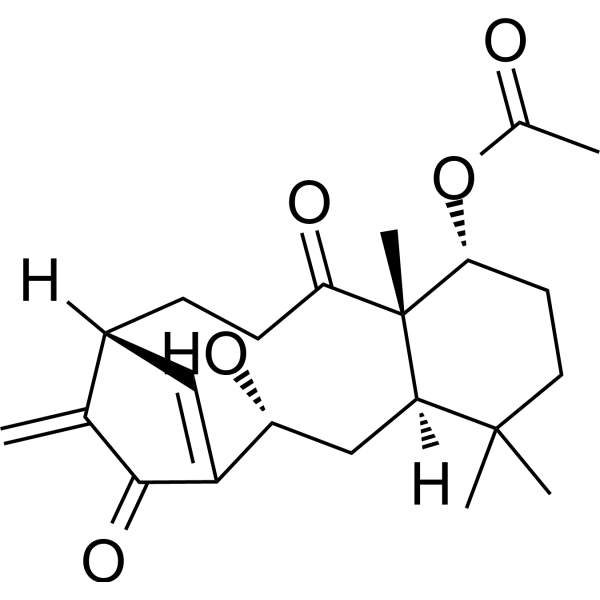 0 ImagesKongensin A is a natural product isolated from Croton kongensis. Kongensin A is an effective, covalent HSP90 inhibitor that blocks RIP3-dependent necroptosishas. Kongensin A is a potent necroptosis inhibitor and an apoptosis inducer. Kongensin A has potential anti-necroptosis and anti-inflammation applications.
-
OD36 hydrochloride
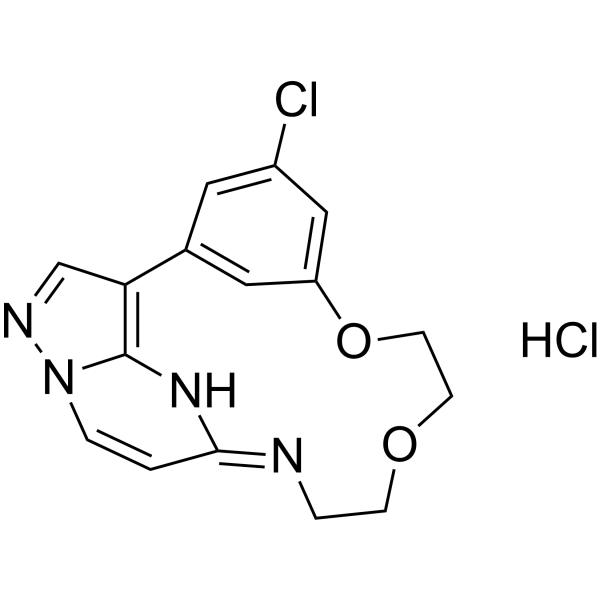 0 ImagesCat. No.: HY-19628ACAS No.: 2387510-88-3

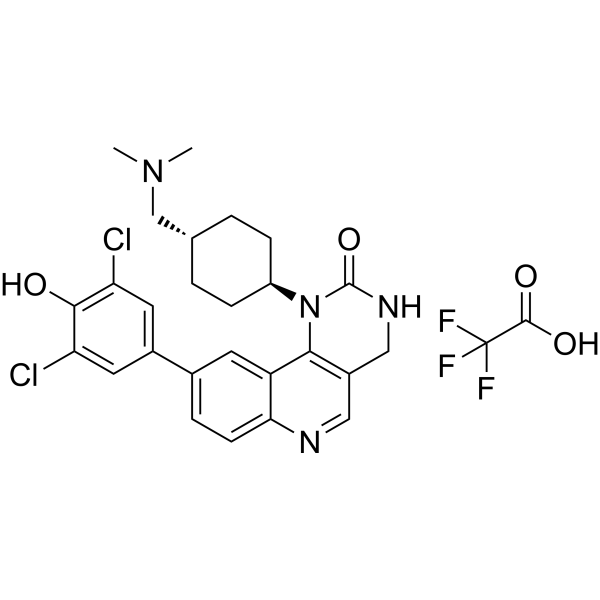
-
AV123
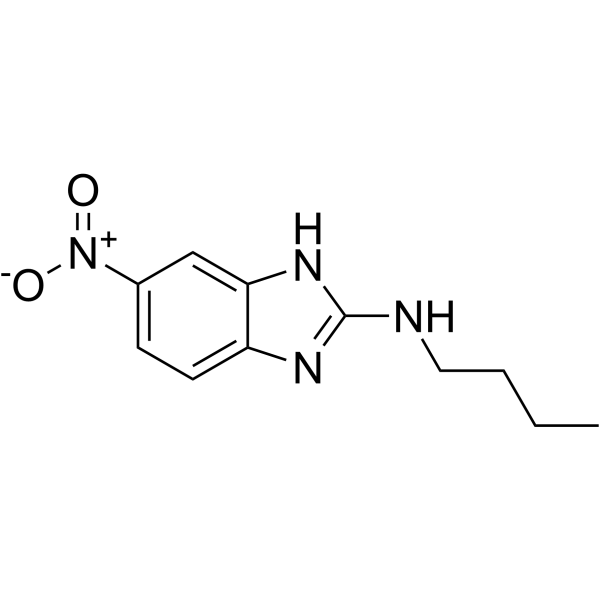 0 ImagesAV123 (compound 12) is a non-cytotoxic RIPK1 inhibitor (IC50=12.12 µM). AV123 blocks the TNF-α-induced necroptotic (EC50=1.7 μM) but not the apoptotic cell death. AV123 can be used in the study of necrotic chronic conditions such as ischemia-reperfusion injury of the brain, heart and kidney, inflammatory diseases, neurodegenerative diseases and infectious diseases.
-
Necrostatin-1 (Standard)
 0 ImagesNecrostatin-1 (Standard) is the analytical standard of Necrostatin-1. This product is intended for research and analytical applications. Necrostatin-1 (Nec-1) is a potent and cross the blood-brain barrier necroptosis inhibitor with an EC50 of 490 nM in Jurkat cells. Necrostatin-1 inhibits RIP1 kinase (EC50=182 nM). Necrostatin-1 is also an IDO inhibitor.
-
cRIPGBM
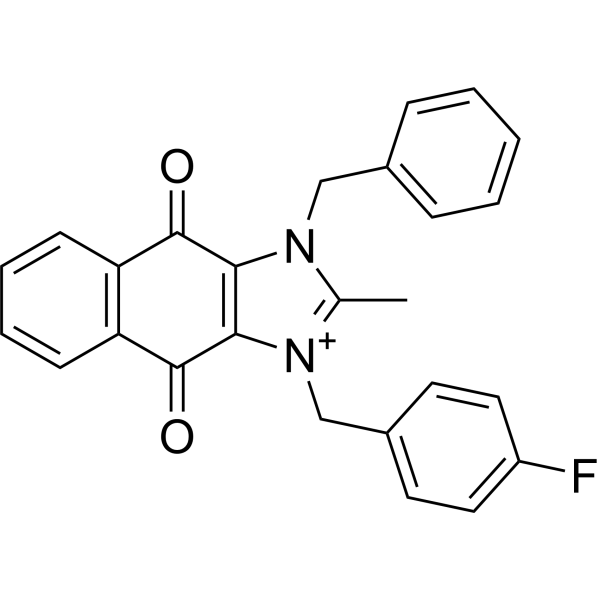 0 ImagesCat. No.: HY-125466CAS No.: 2361988-76-1cRIPGBM, a proapoptotic derivative of RIPGBM, a cell type-selective inducer of apoptosis in GBM cancer stem cells (CSCs) by binding to receptor-interacting protein kinase 2 (RIPK2), with an EC50 of 68 nM in GBM-1 cells.
-
RIP2 kinase inhibitor 1
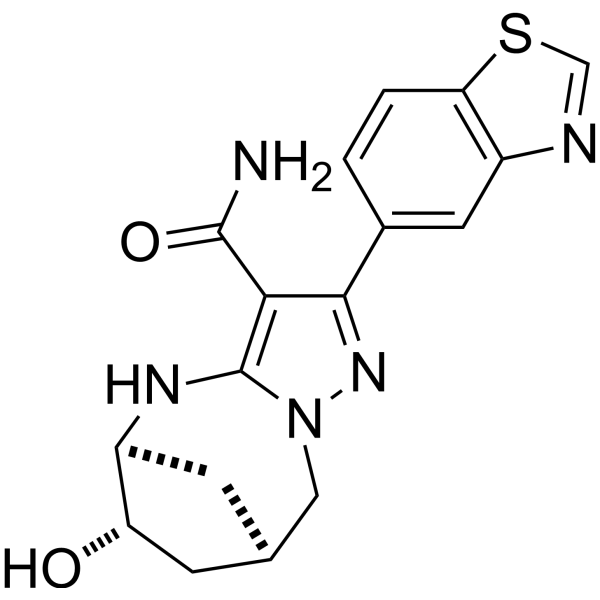 0 ImagesCat. No.: HY-133014CAS No.: 2380028-10-2RIP2 kinase inhibitor 1 (compound 11) is a potent and selective receptor interacting protein 2 (RIP2) kinase inhibitor with an IC50 of 0.03 μM for RIP2 FP. RIP2 kinase inhibitor 1 is used for autoinflammatory disorders.
-
RIPK1-IN-3
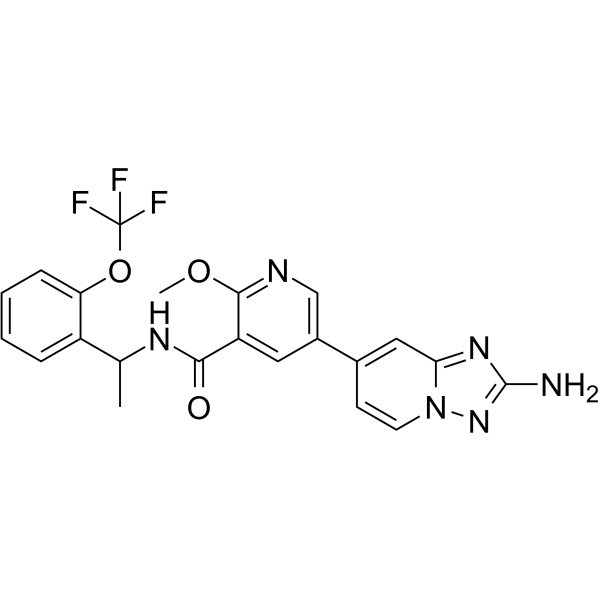 0 ImagesCat. No.: HY-126296CAS No.: 2242677-36-5RIPK1-IN-3 (Example 38), a RIPK1 inhibitor, extracted from patent WO2018148626A1, possesses anti-inflammatory proprieties.
-
RIPK1-IN-10
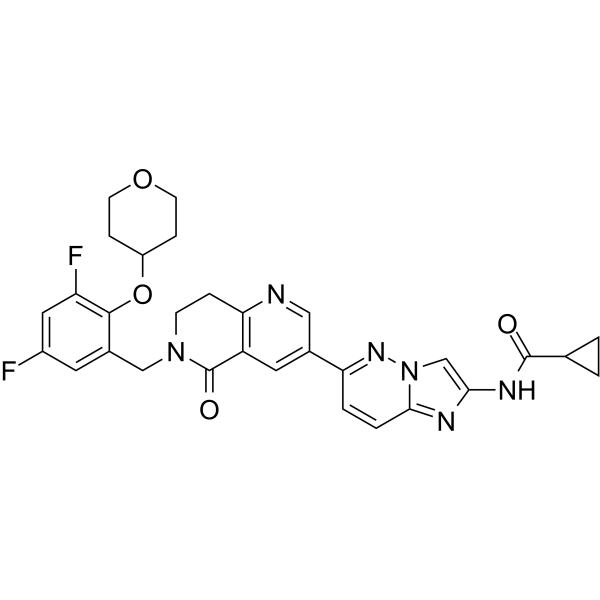 0 ImagesRIPK1-IN-10 is a potent RIPK1 inhibitor, example 37, extracted from patent WO2021160109.
-
Primidone-d5
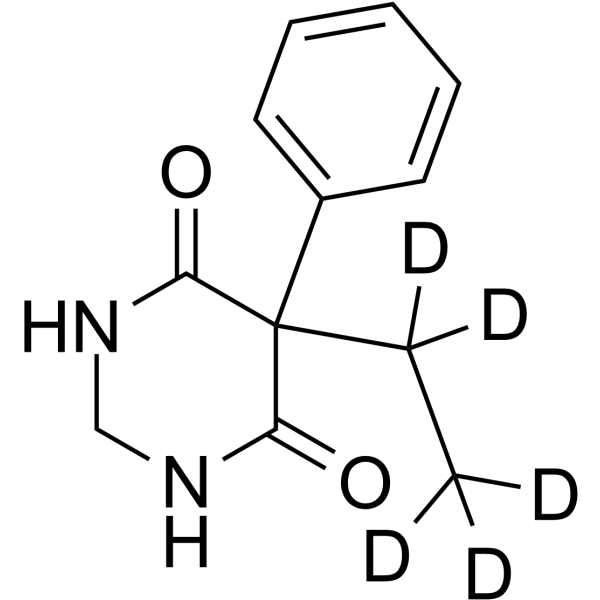 0 ImagesPrimidone-d5 is the deuterium labeled Primidone. Primidone is the orally active inhibitor for TRPM3 (IC50 = 0.6 μM), RIP kinase and voltage-gated sodium channel, and the antagonist for GABA receptor. Primidone can be used as the analgesic and anticonvulsant agent.
-
RIP1-IN-1
 0 ImagesCat. No.: HY-173185RIP1-IN-1 is an orally active RIP1 inhibitor with strong RIP1 binding affinity (Kd: 110 nM). RIP1-IN-1 exhibits strong anti-necroptosis activity. RIP1-IN-1 effectively inhibits the formation of necrosomes by blocking the phosphorylation of RIP1, RIP3 and MLKL signaling pathways. RIP1-IN-1 inhibits necroptosis and can be used in the study of acute liver injury.
-
LD5097
 0 ImagesCat. No.: HY-179234LD5097 is a highly effective and selective PROTAC degrader targeting RIPK1. LD5097 can rapidly and efficiently downregulate RIPK1 and significantly enhance TNFα-mediated apoptosis in Jurkat cells. LD5097 significantly increases the levels of cleaved caspase-3/7 and PARP. LD5097 can be used for the study of acute T-lymphoblastic leukemia.
-
Topoisomerase I/II inhibitor 8
 0 ImagesCat. No.: HY-169509CAS No.: 355400-87-2Topoisomerase I/II Inhibitor 8 (Compound Ru7) is a dual catalytic inhibitor of Topoisomerase I/II, capable of inducing DNA damage and PARP-1 activation, which subsequently leads to the activation of RIPK1, RIPK3, and MLKL, ultimately triggering necroptosis. Topoisomerase I/II Inhibitor 8 demonstrates remarkable anticancer activity by effectively targeting the nuclei of cancer cells and inducing cell death through necroptosis, showing great clinical potential in circumventing drug resistance in cancer treatment.
-
RIPK1-IN-30
 0 ImagesCat. No.: HY-173445RIPK1-IN-30 (compound 24) is a potent RIPK1 inhibitor with an IC50 of 2.01 μM. RIPK1-IN-30 exhibits protective effects in HT-29 cell model of TSZ-induced necroptosis with an EC50 of 6.77 μM.
-
Desmethyl-WEHI-345 analog
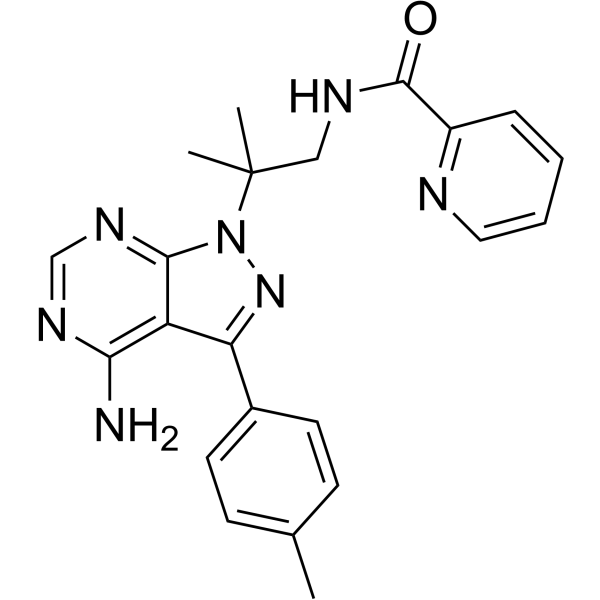 0 ImagesCat. No.: HY-141453CAS No.: 1354825-03-8Desmethyl-WEHI-345 analog is a protein kinase inhibitor extracted from patent WO2012003544A1, example 12. Desmethyl-WEHI-345 analog can be used for the research of colon cancer.

-
RIPK2/3-IN-2
 0 ImagesRIPK2/3-IN-2 (29) is a dual RIPK2 and RIPK3 inhibitor, with IC50 values of 12 nM and 18 nM, respectively. RIPK2/3-IN-2 (29) induces necroptosis, with an EC50 of 0.16 μM.




